TREE Foundation is partnering with Ethiopian-born artist Meron Engidaw Hawke on a new silk scarf collection inspired by Ethiopia’s Church Forests. Through this collaboration, art becomes a powerful tool for conservation, storytelling, and community connection.
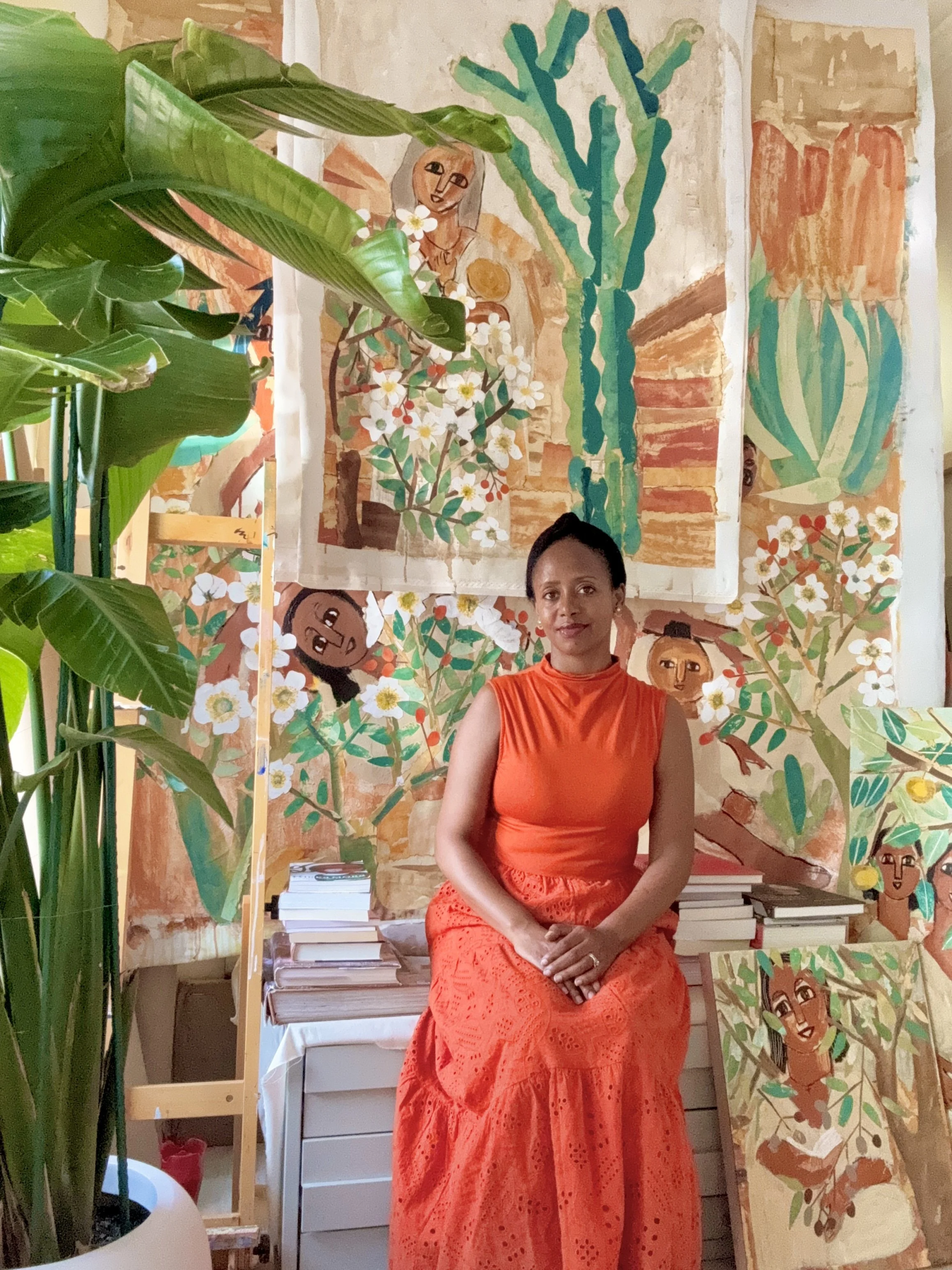
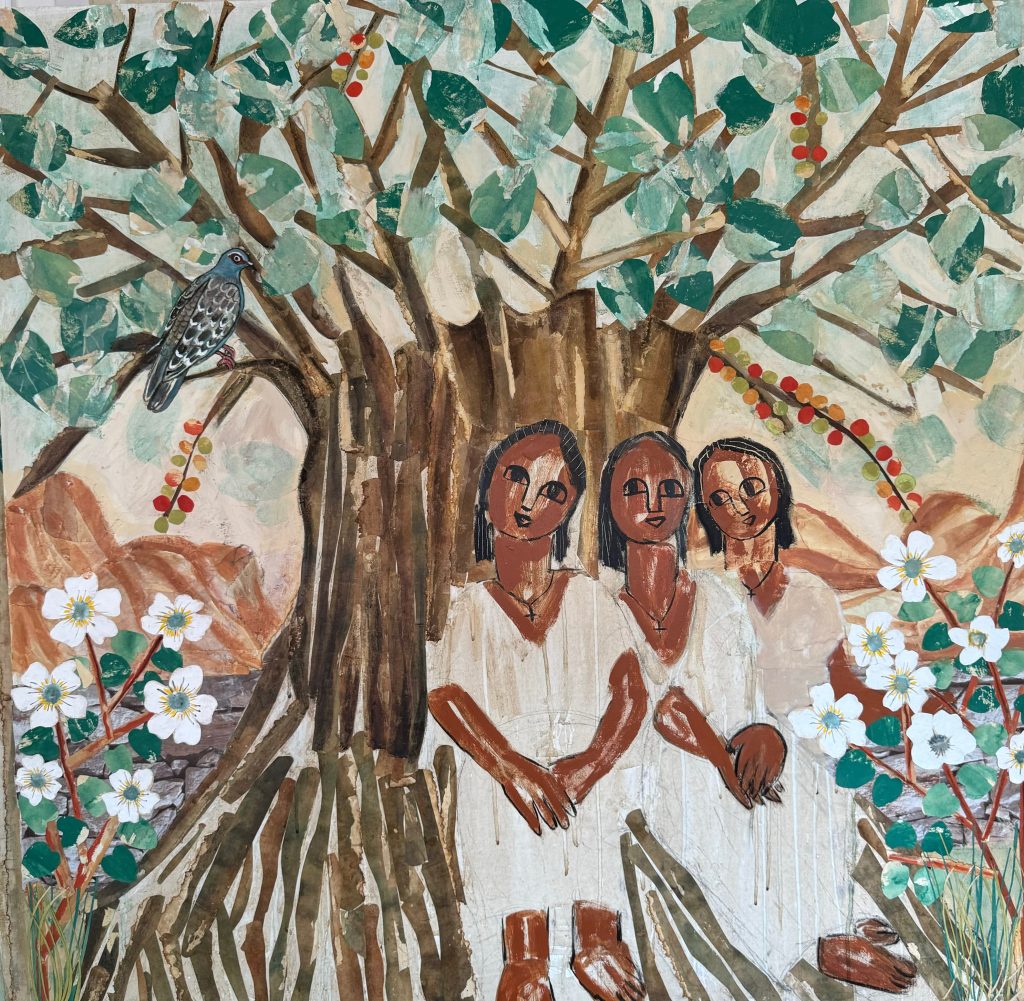
Meron’s artwork is deeply influenced by the landscapes, traditions, and ecological heritage of Ethiopia. Her latest collection, Three Seasons 1, celebrates the beauty and resilience of Ethiopia’s Church Forests, sacred forest fragments that serve as important refuges for biodiversity and are a central focus of TREE Foundation’s conservation work.
A portion of proceeds from the scarf collection will support TREE Foundation’s efforts to protect and restore Church Forests while helping share their story with a wider audience. The project also reflects a growing partnership between artists, conservationists, local communities, and faith leaders working together to safeguard these remarkable ecosystems for future generations.
Through her artwork, Meron explores themes of resilience, identity, community, and humanity’s relationship with nature. Watch the video below for a glimpse into her studio and the inspiration behind her partnership with TREE Foundation.
We recently asked Meron about the inspiration behind her artwork, her connection to Ethiopia’s Church Forests, and her collaboration with TREE Foundation. In the interview below, she shares the stories, memories, and purpose behind this collaboration.
What inspired your Three Seasons 1 painting and its connection to the Church Forests of Ethiopia?
“Three Seasons 1 reflects rural women’s spiritual nourishment in nature. The figures, flowers, and birds are central to the composition. They symbolize resilience and the ability to adapt and flourish despite adversity, much like plants enduring in landscapes threatened by human impact, invasive species, and modernization.
While searching for Amharic books for my children in 2021, I discovered Meg Lowman’s book BEZA. At the time, Ethiopia was experiencing war, and I found myself thinking deeply about humanity, famine, drought, and the effects of climate change.
As I researched social and environmental issues in Ethiopia for my Teff Teffa series, I also discovered documentaries about Ethiopia’s Church Forests. The story, particularly as told by Dr. Alemayehu Wassie, moved me deeply. Seeing how much forest had already been lost made this issue important to my work and ultimately inspired Three Seasons 1.
Addressing these issues through art helped me connect more deeply with my homeland, nature, and the people.”
What drew you to this collaboration with TREE Foundation and support for Ethiopia’s Church Forests?
“I am deeply inspired by the work of Dr. Meg Lowman and Dr. Alemayehu Wassie, and their mission strongly resonated with me.
My goal in creating these silk scarves is to give back to my community while making my artwork available to a wider audience. People who may not be able to purchase an original painting can still connect with the artwork through the scarves.
I considered partnering with other charitable causes, but protecting Ethiopia’s Church Forests felt especially meaningful. If there are no trees, there will be no rain. Protecting these forests creates a legacy for future Ethiopian generations and for the world.”
Can you share a bit about the other two pieces and what they represent?
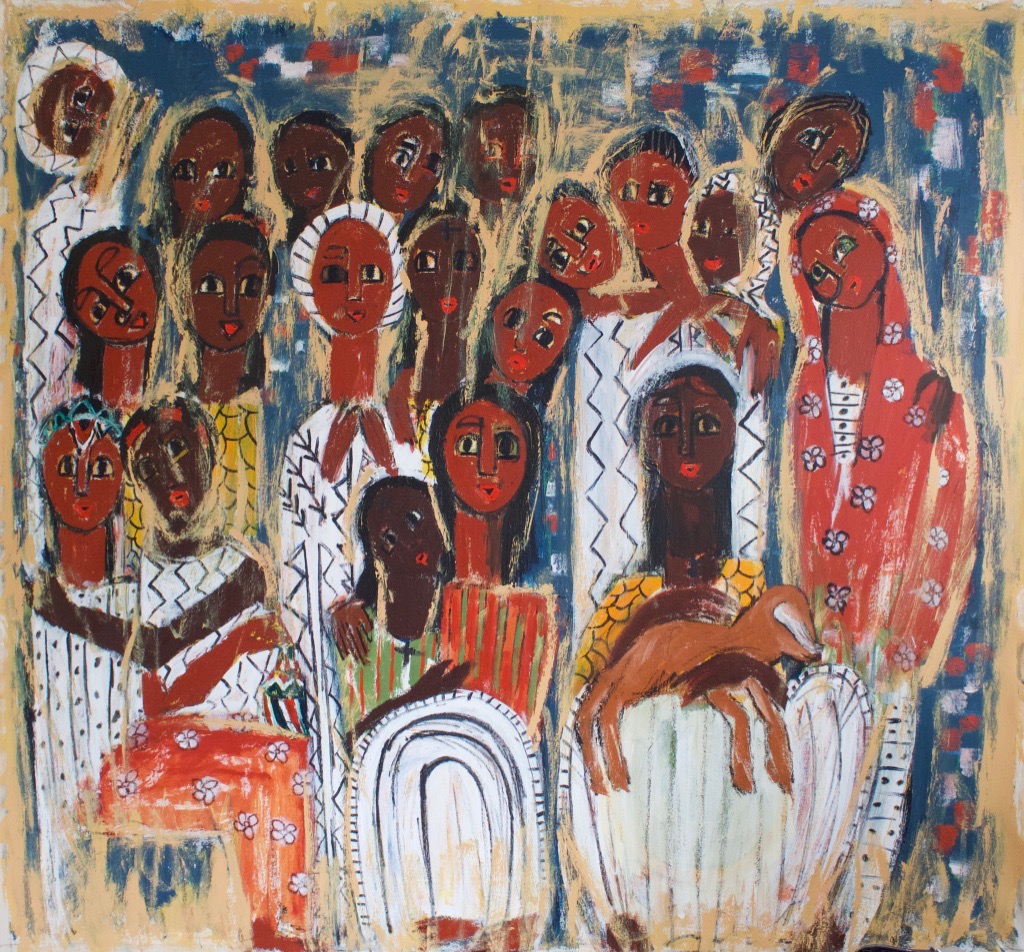
“Solidarity 1 is part of a series I painted in 2019. It explores my experiences living in America as a woman and a mother. The work addresses race, identity, and the importance of celebrating our uniqueness while embracing our shared humanity.
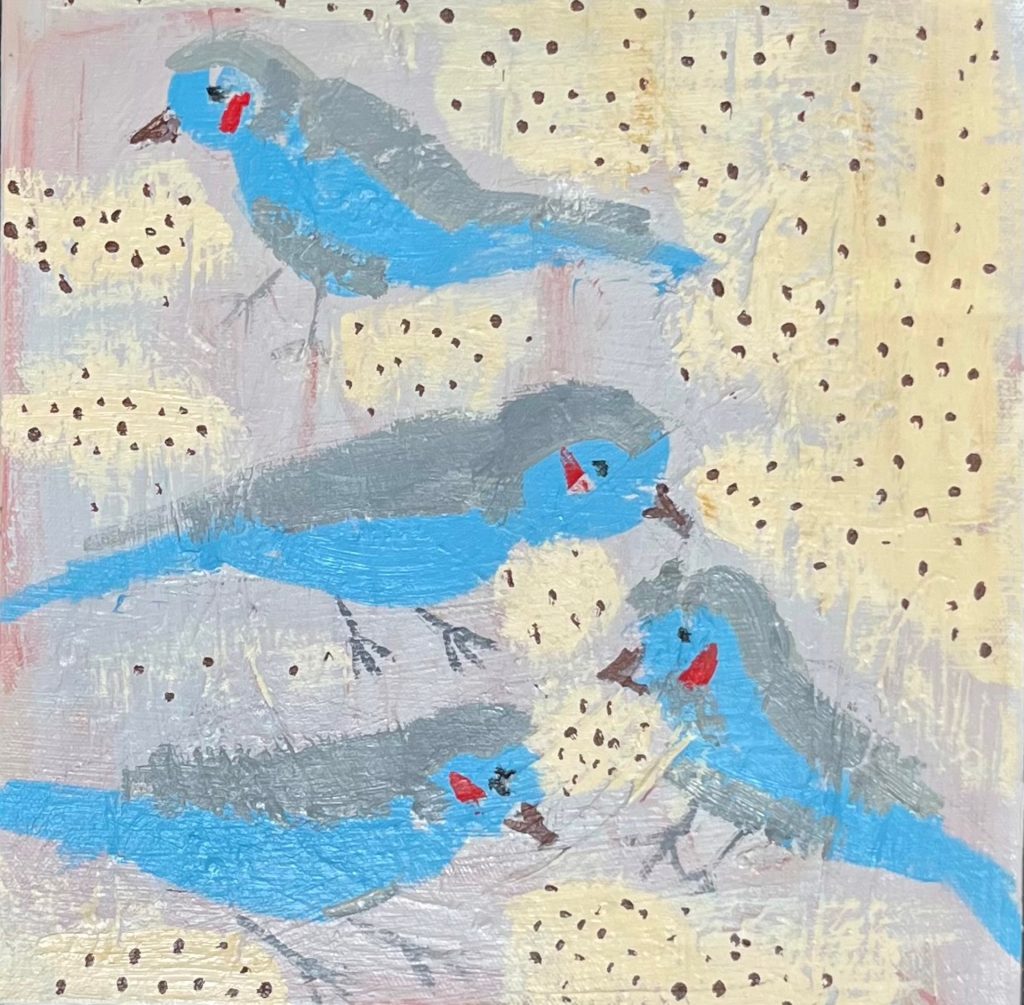
The Red-cheeked Cordon-bleu of East Africa is part of my Teff Teffa series. It addresses the challenges surrounding teff, Ethiopia’s staple grain, including the impacts of war, drought, global demand, labor concerns, and environmental threats.
The painting is rooted in childhood memories of visiting grain mills with my mother. These community gathering places are filled with conversation, recipes, and connection. One of my fondest memories is watching small birds gather to eat the grain around the mill.”
How are the scarves being produced?
“After several months of testing different producers in Como, Italy, I selected a sustainable manufacturer that meets my standards.
The scarves are printed on 100% silk twill and feature double-sided printing, including my signature. Each scarf is finished with hand-rolled edges by Italian artisans.
The packaging is designed to tell the story behind each artwork and its connection to TREE Foundation’s mission. I also hope to incorporate Ethiopian craftsmanship into the collection by commissioning women artisans to create traditional woven pouches and handcrafted brass accessories inspired by cultural traditions in northern Ethiopia.”
What does this project mean to you personally?
“This project represents humanity and solidarity. It brings together priests, scientists, artists, and local communities working toward a common goal of restoring forests.
Collaborating with TREE Foundation and using my artwork to support Ethiopia’s Church Forests feels like a dream come true. Just thinking about it fills me with joy and gratitude that art can contribute to restoring forests and making the world a better place.”
When and where will the scarves be available?
Meron expects the collection to become available following final sample approvals and production. The scarves will be sold through her website and promoted through her social media channels and selected museum shops.
Is there anything you’d especially like people to know or feel when they see or wear these pieces?
“My collage process of fragility and reassembly serves as a visual metaphor for healing, cultural integration, and restoration between people and nature.
I hope people feel that they are wearing resilience, empowerment, hope, and solidarity.
One quote from the documentary The Church Forests of Ethiopia deeply moved me:
‘When someone plants a tree, every time it moves, the tree prays for that person to live longer.’
I think of each scarf as helping save a tree. When the scarf moves, I hope it reminds people of the movement of trees and the connection we share with the natural world.”
Learn More
Through this collaboration, Meron’s artwork helps tell the story of Ethiopia’s Church Forests while supporting efforts to conserve some of the country’s most important ecological and cultural landscapes. Her collection celebrates resilience, community, and the enduring relationship between people and nature.
To learn more about Meron Engidaw Hawke and her work, visit her website at meronengidahawke.com.
Meet the Artist
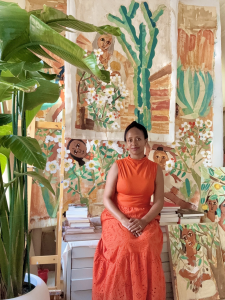
Meron Engida Hawke (b. Addis Ababa, Ethiopia, lives and works in Washington DC) creates vibrant tableaus that act as a vehicle for exploring the artist’s personal experiences and Ethiopian cultural identity.
Through trust in the mark-making process, Engida Hawke has developed a rich visual vocabulary that draws influence from the colors and narratives of ancient Ethiopian art.
At the intersections of abstraction and figuration, Engida Hawke’s works center a cast of expressive figures who together tell stories of vulnerability, empowerment, and resilience.
Fusing memory and imagination, Engida layers tones, symbols and motifs to construct emotive scenes intended to prompt dialogue about migration, the environment and women’s experiences.
The artist’s richly layered paintings blend symbolic language with historical, cultural and contemporary references. A new collage technique — combining coffee-stained canvas, figures painted in acrylic paint, and cut pieces of handmade cotton paper — creates a visually and conceptually layered, textured, multidimensional surface. This process of fragmentation and reassembly becomes a metaphor for healing, restoration, and cultural integration.