Author: Cecilia Wagner

Monarch butterflies in peril

When we try to pick out anything by itself, we find it hitched to everything else in the Universe. — John Muir You don’t have to be a scientist to know and love the monarch butterfly. That iconic, fluttering orange-and-black creature represents a harbinger of summer, of happiness, and of beauty. Not only does it […]
Read More »

5th Grade Students Buzzing with Excitement after Skype Session with CanopyMeg

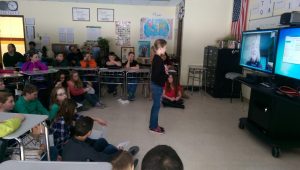
Miss Mahon, 5th grade Language Arts teacher at Fonda-Fultonville Central School, writes the following: THANK YOU, THANK YOU, THANK YOU 1,000000000 TIMES!!! The students are still BUZZING with excitement. In fact, I was just told by a student, ‘This was an experience of a LIFETIME!!!’ With your kindness and generosity, you’ve inspired my 5th graders […]

Read More »

Engage women in science

It has probably become more dangerous to be a woman than a soldier in armed conflict. — Maj. Gen. Patrick Cammaert, former U.N. force commander, 2008 On Nov. 6, 238 scientists (predominantly women) signed a proclamation titled “A call for inclusive conservation” in the prestigious, peer-reviewed journal Nature (Volume 515, pages 27-8). It was 1920 […]

Read More »

Gift from the gut

If you can’t explain it simply, you don’t understand it well enough. — Albert Einstein Did you know that a hundred trillion microbes live in your digestive system, and yet almost nothing is known about them? Our own bodies house one of the highest-biodiversity ecosystems on the planet, and only in the past year or […]

Read More »

New ‘spies’ for science

Imagination is more important than knowledge. — Albert Einstein The era of “citizen spies” is upon us! “CSI: Miami,” take note. Many conservation biologists, geologists, public health specialists and nonprofits are building up a new army, called UAVs (Unmanned aerial vehicles) or “drones,” which are low-cost surveillance technologies that can fly over sites and capture […]

Read More »

A call for inclusive conservation

A new comment in the journal Nature argues that conservation’s impact on the world is being hindered by the field’s lack of inclusiveness — particularly its failure to consistently include both the many different values people hold for nature, and the viewpoints of women and diverse ethnicities and cultures. The comment is coauthored by Heather Tallis, lead scientist for The […]

Read More »

Tardigrades publication by NSF undergraduates involved in the “Wheelchairs and Water Bears in Temperate Forest Canopies” program

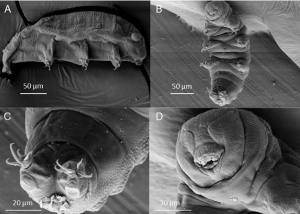
Congratulations to my undergraduates from our NSF Research Experience for Undergraduates grant “Wheelchairs and Water Bears in Temperate Forest Canopies” for their first publication! This article describes a new species of tardigrade from the trees of Kansas, illustrating that discoveries are everywhere, even in our own backyards. Even more exciting is that these students auctioned […]

Read More »

Citizen Science Network iNaturalist Celebrates Millionth Nature Observation as it Launches New Visual Maps

The California Academy of Sciences’ naturalist social network gets major revamp SAN FRANCISCO (November 10, 2014) — This week, iNaturalist.org—the California Academy of Sciences’ online social network for naturalists—launched a new series of easy-to-navigate maps that connect people with the natural world like never before. This living record of Earth’s biodiversity places contributed nature observations […]

Read More »

University of Sydney Alumni Profile: Margaret Lowman

From the University of Sydney’s Biology Newsetter Issue 27: Dr Margaret (Meg) Lowman’s (PhD 1983) email signature encourages you to ‘Enjoy nature!!’ – An attitude she has adopted throughout her career in canopy research and conservation advocacy. Dr Lowman earned the nickname ‘Canopy Meg’ by sharing her research into the world’s rainforests with children via […]

Read More »

Sustainability and science museums

A vision without a task is but a dream, a task without a vision is drudgery, a vision and a task is the hope of the world. — From a church in Sussex, England c. 1730 When I was in graduate school studying ecology during the 1980s, we all shared a conviction to make the […]

Read More »